
 1-888-828-7868
Weighted Utensils for Hand Tremors vs. Tremor-Stabilizing Spoons
Weighted utensils for hand tremors are one common answer when a shaking hand makes meals difficult. This page compares weighted silverware with motorized options side by side, drawing on essential tremor management, so you can weigh what suits daily meals.
Explore tremor spoon options-Copy-3.png)
How Weighted Utensils Steady A Shaking Hand
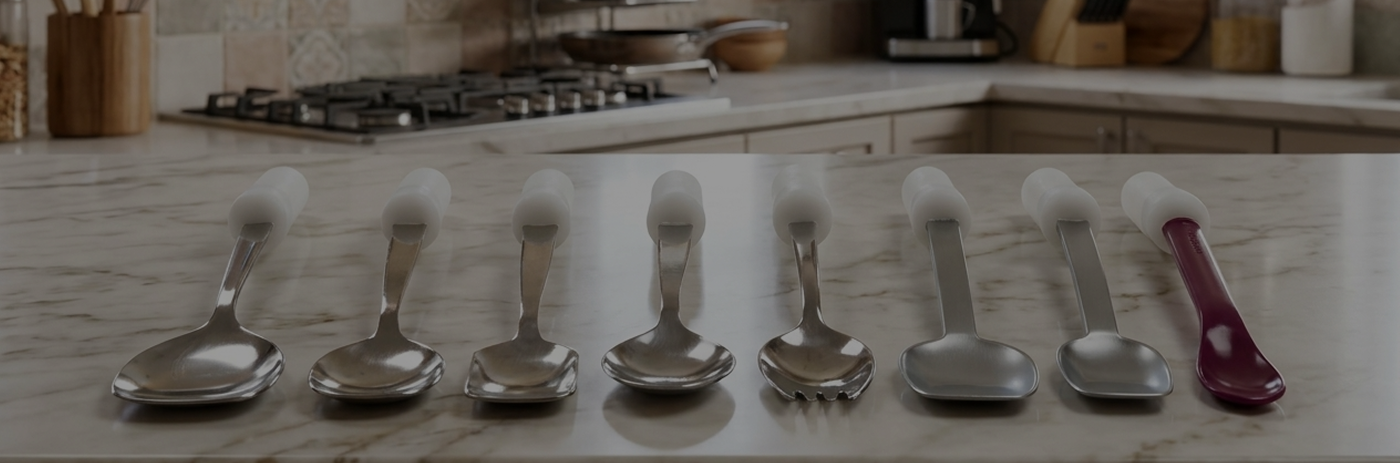
Added weight and a built-up handle give the hand more to push against, which can reduce visible shaking during eating. The extra mass dampens involuntary movement, and a firmer grip adds sensory feedback. A weighted spoon for tremors mainly supports mild to moderate tremor, and weighted eating utensils work without batteries or charging. Results vary by person, so think of them as support, not a treatment. Many start with a light set and add weight if they need more steadiness.
Weighted Utensils Vs Tremor-Stabilizing Spoons
Weighted utensils are passive and simple, while Tremor-Stabilizing Spoon options such as the Gyenno Bravo Twist use built-in motors that detect and counter shake in real time. The table below summarizes the main trade-offs, so you can compare cost, upkeep, and tremor severity before choosing.
| Feature | Weighted utensils | Tremor-stabilizing spoons |
|---|---|---|
| How it works | Passive added mass | Motor detects and counters shake |
| Power | None needed | Charging battery required |
| Tremor level | Mild to moderate | Stronger or more variable |
| Trade-off | Simple, lower cost | Active correction |
-Copy-4.png)
Choosing Weighted Silverware For Tremors
Choosing weighted silverware for tremors starts with fit. Consider the amount of added weight, a non-slip, built-up handle grip, and which pieces you need, such as a spoon, fork or knife. Dishwasher-safe materials make daily care easier. Fit varies by individual, so trial a set before committing, and an occupational therapist can help match the tool to the tremor. We are glad to talk it through. Check that each piece feels balanced, since extra weight should steady the hand without tiring.
Who Benefits: Essential Tremor, Parkinson's And Beyond
Adaptive utensils for tremors help people with essential tremor, Parkinson's disease, and related conditions eat with more independence. They can also help with arthritis or reduced grip strength, where fine-motor control is limited. Our article on the OT role in essential tremor explores the occupational therapist's role, and hand tremors after surgery covers hand tremors after surgery. If you are unsure whether weighted tools suit the person, an occupational therapist can assess grip strength, and tremor before buying.
-Copy-1.png)
When a motorized stabilizing spoon may help more
For stronger or more variable tremor, a motorized tremor-stabilizing spoon can counteract movement that added weight alone does not. The Gyenno Bravo Twist, offered by Pisces Innovation, reduces shakes by up to 85% compared with a normal utensil, according to its product page. It logs tremor data to share with a physician and carries a pacemaker safety warning. Moderate to severe tremor is where this option is worth weighing. Browse our wider tremor support range to compare other available options.
Weight, Grip, And Features That Matter
Key features include balanced added weight, ribbed non-slip handles, and angled or bendable heads that shorten the trip from plate to mouth. Durable stainless steel is easy to sanitize and holds up to everyday use. Handle thickness also changes how secure a utensil feels. Match the features to the person's grip and hand strength, since a set that suits a strong grip may feel heavy to a weaker one. Always test the grip with the hand that will actually use the utensil.
Caring For Weighted Silverware Day To Day
Most stainless-steel weighted silverware is easy to care for, and dishwasher-safe pieces simplify daily routines. Always follow the maker's cleaning and storage guidance. Designs that look like standard flatware support dignity when dining out, because the tool draws little attention. Simple, regular care helps weighted silverware last through everyday use and supports independent meals. Check utensils for wear, and replace any piece that loosens or becomes rough. Store sets together so pieces are easy to find at mealtimes.
Frequently Asked Questions
Added weight can reduce visible shaking for many people with mild to moderate essential tremor. The effect varies by individual, and weighted eating utensils support mealtimes rather than treat the condition. Try a set before relying on it, and an occupational therapist can advise on weight and handle style when that input is available. Many people start with a modest weight and adjust, because comfort often changes as the arm tires during a meal.
Weighted utensils add noticeably more mass than standard cutlery to steady the hand, but heavier is not always better. Too much weight can tire a weaker arm and make eating harder. Match the weight to the person's strength and comfort, and adjust if the arm tires before the meal ends. A moderate weight is easier to manage than a heavy one, so compare a few sets and note how the hand feels after several bites.
Weighted utensils are passive: they add mass to steady the hand. A stabilizing spoon is motorized and actively counters detected shake. Weighted options typically cost less and need no charging, while stabilizing spoons target stronger tremor. The comparison above shows how tremor severity, power needs, and daily routine point toward one or the other. If you are unsure which suits you, an occupational therapist or our team can talk through the main trade-offs with you.
Many people with Parkinson's find weighted utensils steady mealtimes, though benefit depends on tremor type and severity. For more pronounced tremor, a motorized spoon may help more. Because Parkinson's tremor can change over time, it is worth reassessing the choice as needs shift. A weighted set can still be useful alongside other supports, and an occupational therapist can help review whether it still suits the person as the tremor and daily routine change.
Most stainless-steel weighted silverware is dishwasher safe, but always check the maker's guidance for the specific set. Motorized spoons may differ, since some handles need hand-washing. Simple, consistent care supports long-term daily use. Check the maker's guidance on water temperature and drying, and avoid soaking motorized handles or any part containing a battery. Dry each piece promptly to keep finishes smooth, and store weighted sets together where they are easy to reach.