
 1-888-505-3627
What Is a Dysphagia Diet? Textures, Liquids, and Levels
TL;DR
- What is a dysphagia diet: food and liquids modified for safer swallowing.
- Texture (food) and thickness (liquid) are adjusted separately by level.
- IDDSI standardizes eight levels, numbered 0 through 7.
- A speech-language pathologist assigns the level after a swallow assessment.
- Levels can change over time with clinician-guided reassessment.
So what is a dysphagia diet? It is a way of eating in which food texture and liquid thickness are modified to make swallowing safer for someone with swallowing difficulty. It is not one-size-fits-all. The right approach is assigned by level, and those levels follow a global standard called IDDSI, which this article explains in plain terms.
What a Dysphagia Diet Actually Changes

A dysphagia diet works along two separate axes: food texture and liquid thickness. A clinician modifies each one independently based on the person's specific swallowing risk, so someone may need thicker liquids but a near-regular food texture, or the reverse. The goal is to reduce aspiration risk, where food or drink enters the airway, while still preserving good nutrition and hydration. This keeps the diet matched to each person.
The IDDSI Framework in Plain Terms
IDDSI stands for the International Dysphagia Diet Standardisation Initiative. It was created to standardize terminology globally, because descriptions previously varied by country and even between facilities, which caused confusion. The framework uses eight levels in total, numbered 0 through 7. Lower numbers describe liquids, higher numbers describe foods, and the middle levels overlap, giving everyone one shared language for safe swallowing. This consistency matters most when care moves between settings.
What Is a Dysphagia 2 Diet
A dysphagia 2 diet usually refers to Level 2 of the older US National Dysphagia Diet, called “Mechanically Altered.” It includes moist, soft foods that need some chewing. Under IDDSI, which is replacing that system, the closest match is Level 5, “Minced & Moist.” This is easy to confuse with IDDSI Level 2, “Mildly Thick,” which describes a liquid rather than a food. It still flows off a spoon, just more slowly.
What Is a Dysphagia 3 Diet
A dysphagia 3 diet usually refers to National Dysphagia Diet Level 3, “Dysphagia Advanced,” which covers soft, nearly regular foods. IDDSI maps it to Level 6, “Soft & Bite-Sized,” or to “Easy to Chew,” a sub-level of Level 7. IDDSI Level 3 itself is different. It covers “Moderately Thick” drinks and “Liquidized” foods, blended completely smooth with no lumps. It is one of two levels, with Level 4, that span both drinks and foods.
How Food Texture Levels Progress (4 Through 7)
Food textures climb through four stages, each allowing more chewing and biting effort:
|
Level |
Name |
What it means |
|
4 |
Pureed |
Smooth, no chewing needed |
|
5 |
Minced & Moist |
Small soft lumps, minimal chewing |
|
6 |
Soft & Bite-Sized |
Soft pieces, some chewing |
|
7 |
Regular |
Everyday foods |
plan within that level, making sure meals stay balanced and nourishing. Levels are not fixed. They can change over time as the clinical team reassesses swallowing and adjusts the plan accordiThis progression typically reflects swallowing improvement over time, with reassessment guiding each step upward. Each step up is made with clinical guidance.
Who Decides Which Diet Level Is Right
A dysphagia diet level is assigned after a formal swallow assessment, not self-selected. A speech-language pathologist typically determines the appropriate level based on how a person manages different textures and thicknesses.
A dietitian then manages the nutrition ngly.
Why Thickened Liquids Matter So Much
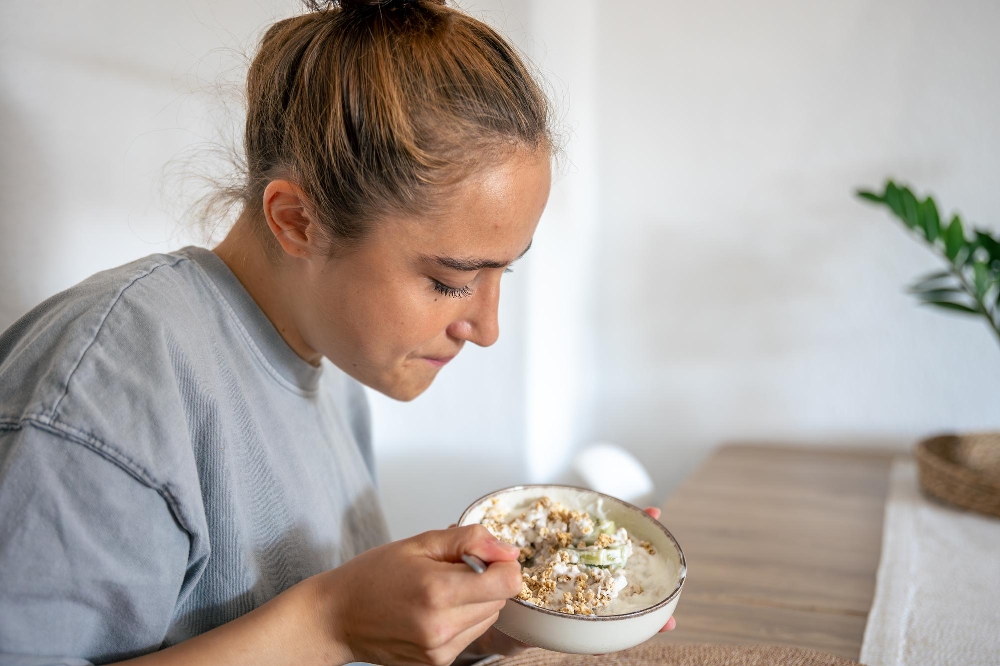
Thin liquids move fastest and are the hardest to control for some swallowing impairments. They can reach the airway before the swallow reflex is ready, raising aspiration risk.
Thickening slows the liquid down, giving the person more time to coordinate and control each swallow. That added control is why liquid thickness is treated as its own axis, and why getting the assigned level right directly reduces aspiration risk.
Common Mistakes Families Make With Modified Diets
Caregivers sometimes trip over the same few things. Watching for these helps keep a modified diet safe:
- Guessing at consistency instead of following the assigned level precisely.
- Assuming visible improvement means they can self-upgrade the diet level without reassessment.
- Not testing new foods or liquids against the IDDSI test methods before serving them.
When in doubt, it is safer to check with the care team than to estimate at home.
How Diet Levels Are Tested and Verified
IDDSI provides simple physical tests for each level, not just descriptions. These include a flow test for liquids and a fork-pressure test for foods, so you can check consistency with everyday items. Clinicians, caregivers, and foodservice staff use the same IDDSI testing methods, which keep a Level 4 puree or a Level 2 liquid consistent across settings, whether at the hospital, in a care facility, or at home.
Adjusting to Life on a Modified Diet
A modified diet is a practical change, but it also carries an emotional side. Texture-modified eating can feel isolating socially, especially at shared meals where others eat differently.
Involving the person in meal planning helps them stay in control of their own food choices. Thoughtful presentation matters as well, since food that still looks appetizing tends to support better intake and makes mealtimes feel more normal.
Everyday Tools That Support a Modified Diet

Alongside diet-level changes, many caregivers look at controlled-pace drinking tools for thickened liquids. Pisces Innovation is the exclusive authorized distributor of the Neater Powered Drinker, a switch-operated device that dispenses controlled amounts of liquid for people with reduced lip closure or suck ability. It suits people with head control and swallowing ability but limited hand or arm function. It supports independent drinking without replacing clinical guidance.
Conclusion
So what is a dysphagia diet, in short? It is eating with modified texture and thickness, assigned by level and standardized by IDDSI so everyone shares one clear language. The levels run from 0 to 7, covering liquids and foods. The safest path is working with a speech-language pathologist and dietitian who assign and reassess the level, rather than self-adjusting. Following the assigned level closely keeps every meal as safe as possible.
Frequently Asked Questions
No. "Soft diet" is an older, informal term that meant different things in different places. IDDSI's numbered levels replaced it with standardized, testable categories so a given texture means the same thing in every facility. A soft texture, for example, now maps to specific IDDSI definitions rather than loose wording, reducing confusion and making a dysphagia diet safer to follow across hospital, care, and home settings.
This is a common point of confusion. Level 2, "Mildly Thick," is a liquid classification, not a food level, so it does not specify which foods are allowed. Food texture is governed separately by Levels 3 through 7. Someone on Mildly Thick liquids will also have a food level assigned alongside it, and those two assignments are made independently based on how the person manages foods and drinks.
No. At Level 3, "Liquidized" foods must be completely smooth with no lumps and no separate liquid draining off. Any solid piece, however small, would not meet the Level 3 standard and would need a higher food level or further modification such as blending. The point of Liquidized texture is to remove the need for chewing entirely, so even tiny solids are kept out at this level.
Follow the level assigned by the speech-language pathologist or dietitian, since the right thickness depends on the individual's swallow assessment. Use commercial thickeners according to their instructions and apply them consistently so every drink matches the assigned consistency. Avoid estimating by eye, because small differences change how the liquid flows. Where available, check the result against the IDDSI flow test to confirm it meets the target level.
The level comes from a swallowing assessment, which usually starts with a bedside screening and moves to a formal evaluation by a speech-language pathologist, sometimes with an instrumental swallow study. If no assessment has been offered and swallowing seems difficult, families can ask the doctor for an SLP referral. The level is then written into the care plan so every caregiver, kitchen, and facility serves the same textures and thicknesses.
Yes, with reassessment. Before the appointment, it helps to note how meals have been going: how long they take, any coughing, and which textures seem easier or harder. A speech-language pathologist uses those notes, along with a fresh assessment, to decide whether a less restrictive level is safe. Levels can also move the other way if swallowing becomes harder, so reassessment works in both directions.