 1-888-505-3627
One-Handed Kitchen Gadgets Guide
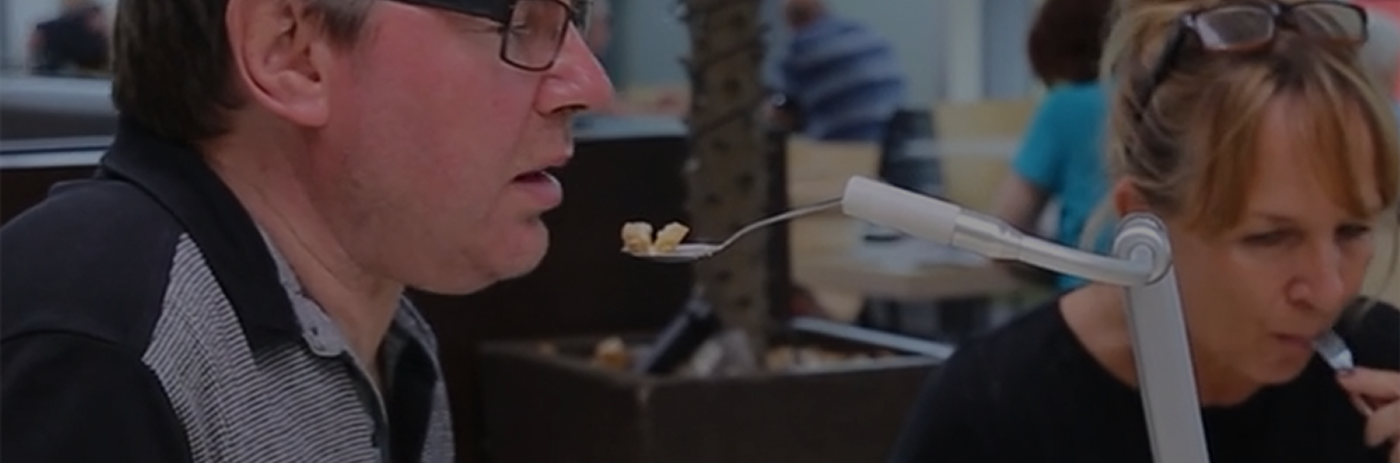
One-handed kitchen gadgets and one-handed cooking utensils are built for people managing amputation, stroke, paralysis, or a temporary single-limb injury — everyday mealtimes that stop assuming a second hand is available. Unlike tremor framing, the challenge here is not involuntary shaking; it is completing tasks with one working hand rather than two.
Talk to Our Team
Why One Hand Needs Different Tools
Most standard eating and prep tools quietly assume a second hand is available. A fork holds food steady while a knife cuts. A bowl gets pinned in place while a spoon scoops. When only one hand is in use, that missing counter-force is the real barrier. Single-hand tools build stabilization into the tool itself, so the object stays put without a helping hand. The design absorbs the job the absent hand would have done.
One-Handed Cooking Utensils
One-handed cooking utensils replace the missing second hand with design. A non-slip grip keeps the handle from twisting during use, and a stabilized base or weighted foot lets the utensil rest without tipping. Wider contact points spread pressure so a single hand can guide, cut, or lift with more control. These features reduce the constant effort of steadying and re-steadying every tool. The result is a calmer, more reliable experience across each mealtime task.
Conditions That Lead To One-Handed Use
People reach for these tools for many general reasons. Amputation of an arm or hand is one. Stroke often leaves one side weaker or harder to control. Paralysis affecting a limb limits reach and grip. Temporary situations count too, such as a fractured wrist or a post-surgery arm in a sling. This overview is general rather than diagnostic, and it reflects common reasons people search this category.
Adapting Everyday Eating Tasks
It helps to break mealtimes into separate tasks, because each one asks something different. Cutting needs a tool that stabilizes food while a single hand applies force, such as a rocker knife. Scooping needs a plate or bowl edge that pushes food onto the utensil instead of away. Drinking needs a cup that resists tipping. Matching one-handed cooking utensils to each task, rather than one catch-all tool, tends to work better.
Choosing One-Handed Eating Tools
Start with the tasks that matter most in your daily routine, not with the longest product list. If independent cutting is the daily frustration, prioritize that before adding a stabilized cup or plate. Consider how often each piece of adaptive eating equipment sees daily use, how easily it cleans, and how it stores. Building a toolkit one priority at a time keeps things manageable and helps you feel out what genuinely restores independence at the table.
Combining Tools For Best Results
Individual tools do more when they work together. A stabilized plate holds food in place while an adaptive spoon does the scooping, and a non-slip mat underneath keeps the whole setup from sliding across the table. Each piece removes one job the missing hand would normally do. Combined thoughtfully, a plate, a spoon, and a mat often deliver a smoother, calmer meal than any single item used on its own.
Building Confidence With One Hand
Confidence at mealtimes grows from setups that behave predictably. When a plate stays put, a spoon grips reliably, and a cup resists tipping, the daily routine stops feeling like a series of small battles. The right combination of tools gives back a quiet sense of independence, letting someone focus on the meal and the company rather than the mechanics. If you would like help finding that combination, our team is here to talk it through.
Frequently Asked Questions
In most cases, yes. Tools designed for single-hand use build in the stabilization a second hand would normally provide. Stabilizing boards hold food while it is cut, and rocker knives let one hand slice with a downward rock rather than a sawing grip. Combined with non-slip mats and plates that hold their place, these tools let a single hand complete tasks that usually assume two, from slicing to spreading to mixing.
Combination utensils and stabilized-grip spoons tend to work best. A combination piece brings more than one function into a single tool, cutting down how often the hand must swap items mid-meal. A stabilized, non-slip grip keeps the utensil steady so it doesn't twist or slip while scooping or spearing. Together, these reduce the need for a second hand and make each mouthful less effortful and more reliable.
People turn to these tools for a range of general reasons. Amputation of an arm or hand is one common cause. Stroke may leave one side of the body weaker or harder to coordinate. Paralysis affecting a limb reduces reach and grip. Temporary situations, such as a broken wrist or an arm recovering from surgery, also lead people here. This is general, non-diagnostic framing, and individual needs vary.
An adaptive spoon is designed so the missing second hand isn't needed to keep it steady. A stabilized, non-slip grip holds firmly in the palm and fingers, so the spoon doesn't rotate or slide while scooping. Some designs add weight or a wider handle to improve control. As a result, one hand can guide the spoon from plate to mouth with less strain and fewer spills throughout a meal.
The two solve different problems. One-handed tools, including adaptive silverware, address hand count. They replace the stabilizing role of a missing or unusable second hand through non-slip grips and weighted bases. Tremor tools address involuntary movement, counteracting shaking so food stays on the utensil. Some products overlap and help with both, but it helps to know which challenge you are solving before choosing, since a single tool rarely does everything equally well.