 1-888-505-3627
One-Handed Kitchen Gadgets For Seniors
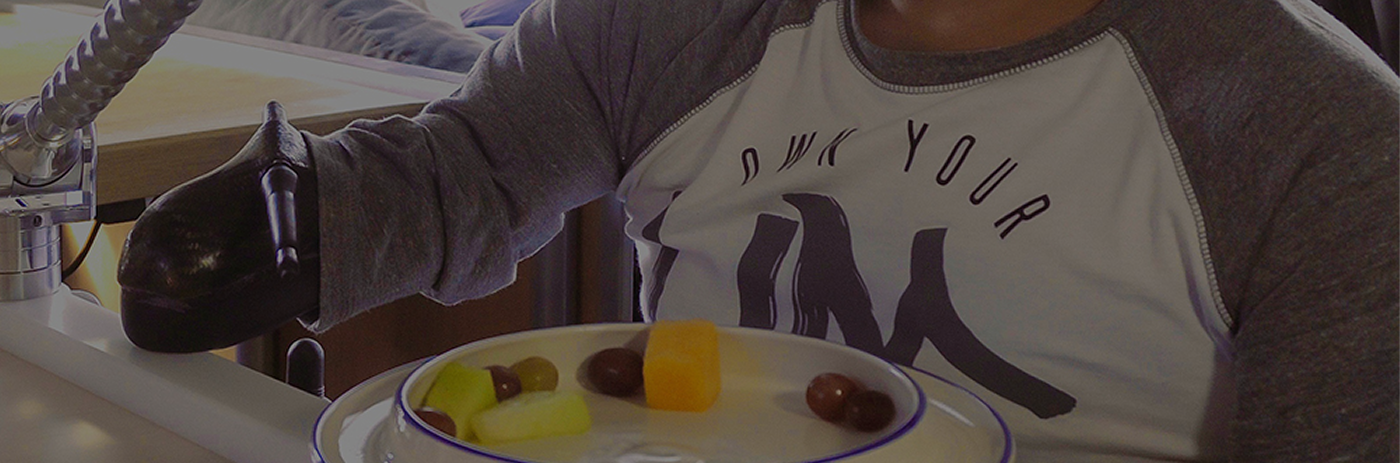
One-handed kitchen gadgets and eating tools help seniors who have lost the use of one hand through stroke, arthritis, or age-related weakness. Pisces Innovation is the exclusive authorized US distributor of the Neater Powered Drinker and the adaptive eating tools featured here.
Talk to Our Team
Why Seniors Need One-Handed Eating Tools
Several aging-related changes can leave an older adult relying on one hand at mealtimes. Stroke may weaken one side of the body, one-sided arthritis can make a hand painful to use, and general age-related weakness reduces grip and coordination over time. One-handed eating tools are designed for these situations, letting a senior manage a meal without needing the affected hand to steady food or cutlery. The goal is not to work around the difficulty but to design around it.
Common Causes In Older Adults
Some causes appear far more often in older adults than in younger people. Post-stroke recovery is one of the most common, as a stroke can affect one side of the body and limit hand use. Arthritis flare-ups can make a joint too painful to grip a utensil, sometimes for days at a time. Fall-related injuries, such as a fractured wrist or shoulder, are also frequent and can temporarily reduce a senior to using one working hand.
Moving From Caregiver-Fed To Independent Eating
Many seniors begin with caregiver-assisted feeding and gradually move toward partial or full independence as they adapt to one-handed tools. That transition to independence often builds confidence with each meal a person manages alone. It is rarely all-or-nothing, and the right pace depends on the individual. If you are supporting a family member through this change, our team is here to talk it through and help you weigh the options.
Stabilized Utensils For One-Handed Seniors
Stabilized designs make one-handed cooking utensils easier to use without a second hand. A non-slip grip helps the working hand hold cutlery securely even when strength is limited, while a stabilized base or weighted handle keeps the hand stabilized while eating. Wider bases and rubberized surfaces reduce slipping and sliding, so a senior does not need the other hand simply to keep food or the tool from moving during a meal.
Choosing One-Handed Cooking Utensils
Choosing the right one-handed cooking utensils depends on a few personal factors rather than one single feature. Consider these:
- Daily routine and the meals a senior eats most often
- Remaining hand strength in the working hand
- Grip size and handle weight that feel comfortable
- Caregiver input on what is realistic day to day
Because needs differ so widely, there is no universal answer. Our team is here to help you match tools to a specific situation and daily habits.
Combining Tools For Daily Meals
Seniors often get better results by combining several adaptive tools rather than relying on one. A stabilized plate with raised edges gives food something to push against, an adaptive spoon shaped for a weaker grip makes lifting easier, and a non-slip mat keeps the whole setup from sliding on the table. Used together, these pieces support one-handed eating more effectively than any single item can manage on its own during a full meal.
Supporting Dignity During The Transition
Mealtimes carry meaning beyond nutrition, and losing the ability to eat unaided can feel discouraging. The right combination of tools can help restore confidence and dignity during this transition, allowing a senior to take part in family mealtime rather than waiting to be fed. That change matters for the whole household. When a person manages their own plate again, the shift is felt by the family as much as by the senior.
Frequently Asked Questions
Most one-handed kitchen gadgets still rely on some grip and lifting ability from the working hand. Non-slip grips and stabilized bases reduce how much effort is needed, but they do not remove it entirely. For seniors with very limited strength, a powered or robotic feeding device may be more appropriate than a standard adaptive utensil. If you are unsure which category fits, our team can help you compare options for a specific situation.
Yes, generally. Many seniors transition to one-handed cooking utensils as part of post-stroke rehabilitation, adapting the way they eat while the affected side recovers or stabilizes. This shift often happens with occupational therapy guidance, since a therapist can assess remaining hand function and suggest suitable tools. The pace varies from person to person, and progress is usually gradual rather than immediate, which is completely normal during stroke recovery.
The core mechanisms are similar across ages, since non-slip grips and stabilized bases work the same way regardless of who uses them. What often differs with adaptive utensils is sizing, assumptions about grip strength, and features that support caregiver use. Older adults may need lighter handles, easier-to-clean surfaces, and designs that account for arthritis or reduced dexterity, so product selection tends to reflect those age-related considerations.
Some eating aids extend to drinking, though not every utensil does. Stabilized cups with weighted bases and spouted lids are commonly paired with one-handed utensils to create a fuller mealtime solution. For seniors who need more support, the Neater Powered Drinker offers controlled, independent drinking without holding a cup. Because drinking aids come in many forms, it helps to look at eating and drinking needs together when planning a complete setup for daily meals.
Adjustment time varies widely from one person to the next, depending on the underlying cause, remaining hand function, and how often the tools are used. An adaptive spoon or similar utensil may feel natural for some seniors quickly and take others more practice. Rather than expecting a fixed timeframe, it helps to allow steady practice at each meal. Occupational therapy guidance can support the process and make the adjustment smoother.