
 1-888-828-7868

Best Adaptive Utensils for Arthritis and Tremors
Arthritis utensils and tremor utensils often sit in the same adaptive category, yet they solve different problems. The underlying mechanisms differ in ways this page explains before you decide which design suits your needs.
Talk to Our Team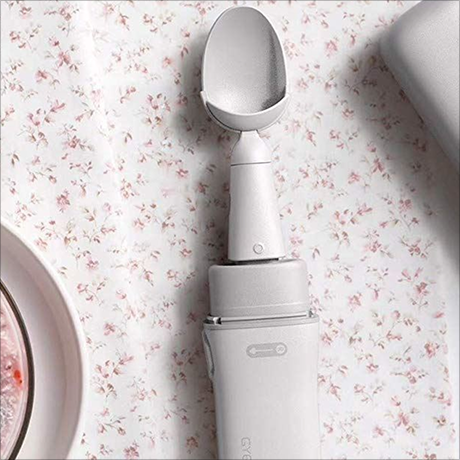
How Arthritis Utensil Affects Grip
Arthritis commonly brings joint pain and stiffness to the fingers and wrist, which makes closing a hand around a thin utensil handle difficult. Reduced grip strength means a fork or spoon can slip or feel painful to hold through a meal. The effort of gripping a narrow handle adds strain, so eating becomes tiring rather than routine. Handle design matters here more than any single feature. A wider, cushioned grip spreads the load across the hand and reduces how hard the fingers have to close.
How Tremor Affects Grip At Mealtimes
Tremors work differently. Rather than pain or stiffness, it introduces involuntary movement that shakes a utensil even when the hand grips it firmly. That hand instability spills liquids and misdirects food between plate and mouth, which frustrates the effort of self-feeding. The person may hold the utensil well and still struggle to guide it accurately. This is a control problem, not a grip-strength problem, and it calls for a different response. The solution is dampening motion, not reducing the effort of holding.

Same Category, Different Mechanism
Because both conditions affect mealtimes, they share the adaptive utensil shelf, but the right features diverge. Someone with arthritis generally responds better to a lightweight design that is easy to grip without straining sore joints. Someone with tremors generally responds better to added weight, which helps dampen shaking. Treating the two as interchangeable creates a mechanism mismatch: a heavy utensil can tire arthritic hands, while a very light one does little to steady a tremor.
Lightweight Versus Weighted Utensils
The two utensil types work through opposite principles:
- A lightweight utensil, such as a well-balanced adaptive spoon, reduces hand fatigue, so gripping through a full meal costs less effort for arthritic joints.
- A weighted utensil adds mass that dampens involuntary movement, helping steady food between plate and mouth for tremor.
Matching the mechanism to the condition matters, because the feature that eases arthritis is not the feature that steadies a tremor, and the reverse holds too.
Choosing Utensils For Arthritis Or Tremor
Start by identifying which condition type is the primary driver at your table. If sore joints, reduced grip strength, and hand fatigue dominate, arthritis silverware with easy-grip handles usually fits best. If shaking is the main obstacle, weighted or tremor-focused designs, and sometimes gloves for shaky hands like the Steadi-3 Plus Anti-Tremor Glove, tend to serve better. When both are present, weigh which affects meals more before choosing.
Utensils That Work For Both Conditions
Some overlap does exist. A built-up handle that is wider and cushioned but not heavily weighted can suit people managing both mild arthritis and mild tremor at once, since the thicker grip eases sore joints without asking for much force. A non-weighted grip aid may cover combined needs when neither condition is severe. That said, as either condition grows more pronounced, a single utensil rarely serves both needs equally, and separate designs often become necessary.
When To Involve An Occupational Therapist
When arthritis silverware alone does not resolve a combined arthritis-and-tremor case, an occupational therapist can help pinpoint the right fit. Professional guidance is valuable precisely when the picture is mixed or changing, because an occupational therapist can assess grip, movement, and daily routines directly and recommend accordingly. If you have tried adaptive utensils without success, a professional input often clarifies the next step. A referral through a GP or neurologist is usually the fastest route to a formal assessment.
About Pisces Innovation
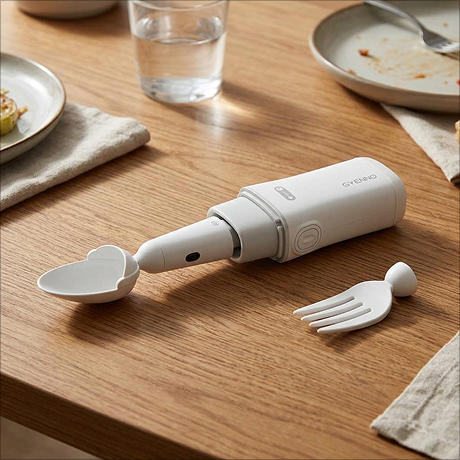
Pisces Innovation is the exclusive authorized US distributor of the Steadi-3 Plus Anti-Tremor Glove and the Gyenno Bravo Twist Tremor-Stabilizing Spoon, assistive tools for people managing tremor, arthritis, and reduced hand function. If you'd like help comparing utensils for arthritis or tremor, our team is here to talk it through.
Frequently Asked Questions
Lightweight utensils with thick, textured, non-slip handles are generally recommended for arthritis. The wider grip reduces how hard the hand must close, which eases sore joints, while a non-slip surface lowers the risk of the utensil sliding during a meal. Because arthritis often brings reduced grip strength and stiffness, keeping the utensil light also limits hand fatigue. Individual needs vary, so features that suit one person may need adjusting for another.
Many can. Lightweight, non-slip handles that suit arthritis are also common features in one-handed designs, so the same grip principles often carry over. That said, the two categories are not identical: a one-handed design may add specific features, such as a plate guard or a rocker knife, that go beyond a standard arthritis utensil. If one-handed use is a priority, look for designs built with that purpose rather than assuming every arthritis utensil covers it.
This is general guidance, not a diagnosis. Broadly, arthritis tends to show as joint pain, stiffness, and difficulty closing the hand, while tremor shows as shaking that continues even when the hand grips firmly. The two can also occur together. The most reliable step is to speak with a doctor, who can identify the underlying cause and advise on management. Knowing which is the primary driver then helps guide any utensil choice that follows.
For stiff or painful hands, wide, cushioned, non-slip handles and lightweight materials tend to matter most. A wider handle means less finger flexion is needed to hold it, cushioning softens pressure on tender joints, and a non-slip surface reduces the effort of maintaining a grip. Keeping the utensil light limits hand fatigue across a full meal. Bendable or angled heads can help too, though the core comfort features usually come from the handle itself.
Coverage varies by plan and by device type, so there is no single blanket answer. Some adaptive utensils may qualify under certain benefits, while others are treated as out-of-pocket daily-living aids. Because policies differ widely, the most reliable step is to confirm directly with your insurer, asking specifically about the device you are considering and any documentation they require. A prescription or an occupational therapist recommendation can sometimes support a coverage request.