 1-888-505-3627
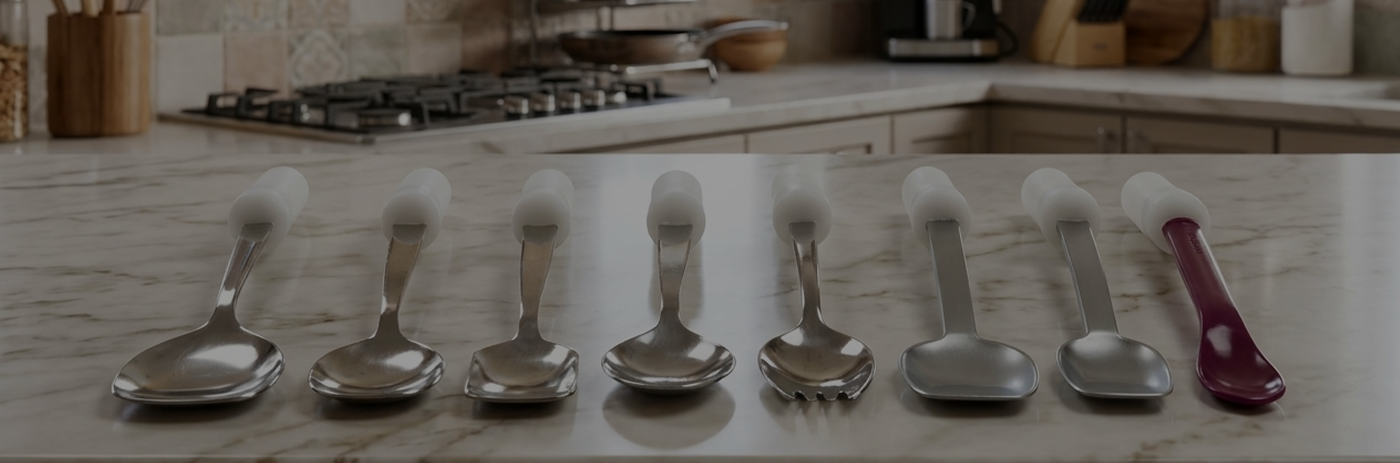
Adaptive Silverware
Adaptive silverware includes spoons and forks built for people managing weak grip, tremor, or one-handed use. Pisces Innovation is the exclusive authorized US distributor of the Gyenno Bravo Twist Tremor-Stabilizing Spoon, and this page explains how these designs work so you can understand which features matter most for eating with more independence and comfort.
Talk to Our Team
Why Standard Silverware Is Difficult
Standard cutlery is designed around a thin handle that assumes steady grip strength and precise control. For someone living with tremor, weakness, or reduced hand mobility, that thin profile is hard to hold and easy to drop. Keeping the utensil level from plate to mouth demands fine motor control that many users simply do not have, turning an everyday meal into a frustrating and tiring task. A handle built for a typical hand makes every stage harder when grip or coordination is reduced.
Built-Up Handle Silverware Explained
A built-up handle adds thickness to the grip so the utensil is easier to hold without a tight, precise pinch. The larger grip diameter reduces the fine motor control needed to keep the utensil steady, spreading effort across the whole hand. A comfort grip surface adds friction so the piece stays put. An adaptive spoon with this design suits people with reduced grip strength or limited finger dexterity. The thicker profile also makes the utensil easier to feel, which helps when sensation in the hand is reduced.
Weighted Utensils For Tremor Control
Weighted utensils place added weight in the handle to help steady the hand during eating. The extra mass resists the acceleration of involuntary shaking, so the spoon moves less dramatically as the hand travels from plate to mouth — and more food reaches the mouth with less spilling. The weight works with the natural resistance of the hand, supporting hand stability without any battery or electronics. It is a simple, mechanical approach to managing a shaky grip at the table rather than a treatment for the underlying condition.
Rotating And Swivel Spoon Designs
Swivel spoon designs let the bowl of the spoon pivot independently of the handle. When the wrist rotates or tilts during the hand-to-mouth motion, the swivel head compensates by keeping the utensil level so food stays in the spoon rather than tipping out. This self-leveling action is intended to help people who cannot fully control wrist rotation, whether from limited range of motion, weakness, or coordination difficulties, and it works without any powered parts. The Gyenno Bravo Twist also comes with an additional fork attachment. The magnetic fork head features a specialized rotating mode designed to easily wrap and eat spaghetti or noodles.
Choosing The Right Adaptive Utensil
Choosing an adaptive Utensil depends on how your hand actually works day to day. Consider a few factors together:
- Hand size, so the grip diameter feels natural rather than too thick or too thin
- Grip type and grip strength, which shape whether a built-up or comfort grip helps most
- Whether tremor or wrist control is the bigger challenge, pointing toward weight or swivel designs
- Daily use patterns, since a spoon used at every meal should stay comfortable over time
Materials And Care
Adaptive silverware and other adaptive kitchen tools across the category tend to use similar materials. Bowls and forks are commonly made from stainless steel, chosen for durability and easy cleaning. Handles often feature foam grips or rubberized coatings that add cushioning and friction for an easier hold. Many stainless steel pieces are dishwasher safe, though foam or coated grips sometimes need hand washing to protect the surface. Always check the care instructions for the specific product you own.
Finding The Right Fit
The right fit is rarely about one feature in isolation. It comes down to hand size, grip type and grip strength, and how the utensil holds up under daily use. Some people benefit most from added weight, others from a swivel head, and many from a built-up grip alone. If more than one challenge is present — tremor and reduced grip together, for example — a weighted spoon with a built-up handle often addresses both at once without requiring two separate tools.
Frequently Asked Questions
Adaptive silverware is cutlery redesigned for people who find standard utensils hard to use. That includes anyone managing weak grip, tremor, or limited hand mobility from conditions affecting the hands and arms. Instead of a thin, uniform handle, these adaptive eating utensils use features like thicker built-up grips, added handle weight, or swivel heads. Each adjustment reduces the strength or precision a person needs to hold the utensil and bring food to the mouth independently.
An adaptive spoon built for tremor uses a weighted or stabilized handle to steady the hand during eating. The added mass in the handle dampens shake as the hand moves from plate to mouth, reducing how much the spoon wavers along the way. This is a general mechanical effect rather than a treatment for the underlying condition. By calming the motion, a weighted spoon helps more food stay on the spoon and reach the mouth.
The main differences are handle thickness, weight, and grip design. Regular silverware uses a thin handle that assumes steady grip and fine control. Adaptive eating utensils change that starting point: built-up handles are thicker and easier to hold, weighted handles help steady tremor, and textured or coated grips add friction so the piece does not slip. The eating end is often similar, but the handle is engineered around reduced hand strength and control.
Yes. Most adaptive spoons are designed for single-hand stability and control, which is central to their purpose. Like other one-handed cooking utensils and eating tools, features such as a built-up grip, a weighted handle, or a swivel head all help one hand do the work of holding, steadying, and leveling the utensil. This matters for people with one-sided weakness after a stroke, or anyone who relies on a single hand for daily tasks.
A swivel spoon tends to be a better fit when wrist rotation or tilt is the main challenge — when the hand can carry the utensil to the mouth but the wrist position changes unpredictably along the way. A weighted spoon is usually the better starting point when tremor is the primary issue and wrist control is relatively intact. When both problems are present, some adaptive spoons combine a swivel head with a weighted handle, addressing both challenges in a single design.