
 1-888-828-7868
Adaptive Eating Equipment Guide
Adaptive eating equipment helps when eating has become a struggle because of tremor, a weak grip, or the use of only one hand. This guide explains the main categories plainly, so you can explore the options with confidence.
Talk to Our Team-Copy-4.png)
Who Needs Adaptive Eating Utensils
People search for adaptive eating utensils for many reasons. Tremor can make a loaded fork hard to steady. Arthritis and reduced hand strength affect a secure grip. Stroke recovery often leaves someone relying on one-handed use, while limited dexterity makes standard cutlery frustrating. The common thread is not a single diagnosis but a practical challenge: bringing food from plate to mouth with less strain.
Types Of Feeding Devices
Adaptive eating equipment groups naturally by mechanism:
- Weighted utensils that add mass to steady movement.
- Built-up handle designs that widen the grip so a weaker hand can hold on securely.
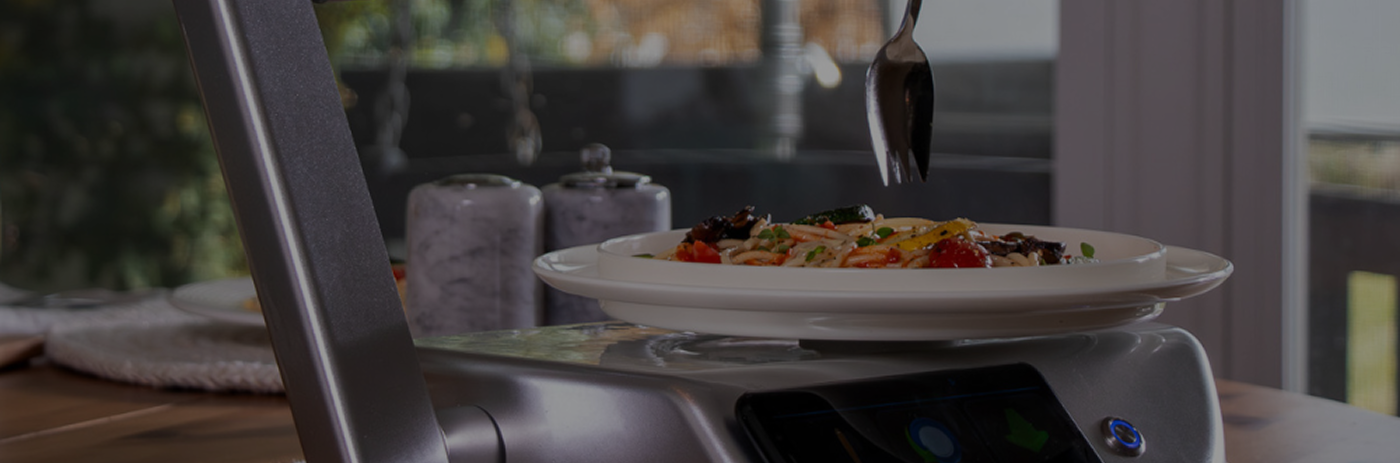
- Powered feeder and robotic options such as the Neater Eater Robotic Dining System that assist users who cannot bring food to their mouth on their own.
Adaptive eating utensils remain the most familiar starting point, offering a low-effort way to restore control at the table.
-Copy-2.png)
How Weighted Utensils Help
Weighted utensils work through simple ergonomics rather than any medical treatment. The added weight increases hand stability, giving the hand more to push against as it moves. This proprioceptive feedback often produces a steadier, more predictable path from plate to mouth, with less spilling during the hand-to-mouth arc. Because the mechanism is purely mechanical, weighted options are often an approachable first step toward more controlled, less spill-prone meals.
Manual Versus Powered Devices
The right choice depends on how much hand function remains. A manual utensil, such as a weighted or built-up handle design, suits mild-to-moderate grip limitations where someone can still guide the tool themselves. A powered feeder assists users with more significant motor limitations by performing scooping or lifting actions on their behalf. Manual tools extend existing ability, while powered devices raise the independence level where movement is no longer possible.
-Copy-3.png)
Choosing Adaptive Eating Equipment
Start with a few practical questions. How much hand control remains, and is it steady or variable? Can one or both hands be used, or is one-handed use the reality? Is there caregiver support at meals, and what is the usage setting? For most people, adaptive eating utensils are the common first purchase, since they are simple to try before considering more involved powered options.
Caring For Adaptive Utensils
Cleaning depends on the type of tool. Most manual adaptive utensils are dishwasher safe, though it is worth checking each product first. This includes many one-handed kitchen gadgets used for meal prep. Powered devices usually call for a gentler routine: hand wash the feeding arm and wipe components rather than submerging them, and follow any battery care guidance for rechargeable models.
Building Mealtime Confidence
Mealtimes are about more than nutrition. They are a daily rhythm tied to routine, company, and a sense of self. The right adaptive eating equipment, from utensils to one-handed cooking utensils, supports independence and dignity by letting someone manage their own meal. This eases pressure on caregivers, and confidence tends to grow with each meal handled alone. If you are unsure where to begin, our team is here to talk it through and help you weigh the options.
About Pisces Innovation
Pisces Innovation is the exclusive authorized US distributor of the Neater Eater Manual and a range of adaptive eating and drinking devices for people managing tremor, weakness, or limited hand function. If you have questions about which option fits your situation, our team is here to talk it through.
Frequently Asked Questions
Adaptive eating equipment is a category of tools designed to help people with limited dexterity eat and drink independently. It includes utensils and devices that account for tremor, weak grip, or one-handed use. Rather than treating a condition, these tools adjust the way food is held and moved, making the physical act of eating easier. The goal is practical: more control at the table.
People search for adaptive eating utensils across a wide range of situations. Common reasons include tremor, arthritis, weak grip, and limited range of motion in the hand or arm. Reduced hand strength after stroke recovery and general loss of fine motor control also lead people here. The category is intentionally inclusive rather than tied to a single diagnosis, since the shared challenge is holding and guiding cutlery.
A weighted adaptive spoon or fork works through added weight rather than any medical mechanism. The extra mass gives the hand more resistance to move against, which many users find makes the hand-to-mouth movement feel steadier. In practice, this often means less spilling and a more controlled bite. The ergonomics of a heavier handle can make eating feel more manageable and less tiring.
The difference comes down to how much the tool does for the user. A manual adaptive eating device requires some hand function — the person still guides the utensil — and suits mild-to-moderate limitations. A powered feeder performs the scooping or lifting motion for users whose motor limitations are more significant. Manual tools extend the ability someone already has, while powered devices take over when directing a utensil toward the mouth is no longer possible.
For veterans, VA benefits programs may cover adaptive eating equipment when it supports independence in daily activities such as eating. Coverage depends on individual eligibility, the specific device, and the recommendation of a VA clinician or occupational therapist. Because each situation differs, speaking with a VA benefits coordinator or your VA care team is the best way to confirm what applies to you. They can also walk you through the steps involved in requesting equipment through your local VA facility.